

DePaul University Athletics
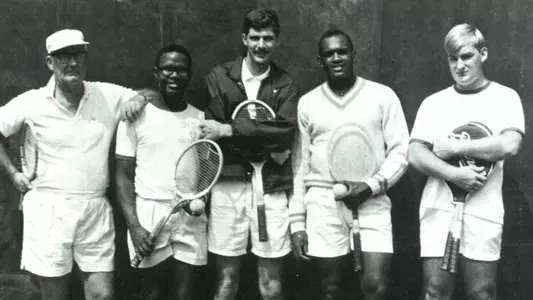
Life-Changing Experience for Hall of Fame Inductee Searles
1/22/2019 2:21:00 PM | MEN'S TENNIS
Men's tennis standout Mel Searles being inducted into DePaul Athletics of Fame on Feb. 2
CHICAGO – The men's tennis scholarship that Mel Searles received from DePaul back in the mid-1960s was absolutely a life-changing moment for the city kid who grew up in Douglas Park and whose parents could not afford to send him to college.
He came up through the youth tennis ranks taking advantage of his superb hand-eye coordination and other natural gifts to excel in a sport that not many African-American youngsters competed.
His skill and intense focus led him to the city singles championship, and he advanced to the semifinals of the state tournament.
"DePaul's tennis coach Jim Seri found out about me from some of the guys on our DePaul team that I played with in junior tennis," Searles said. "If coach Seri had not given me that scholarship, I never would have gone to college and become a successful pharmaceutical representative for nearly 30 years."
Searles and the 1967 team that advanced to the NCAA tournament were inducted into the DePaul Athletics Hall of Fame in 2010.
Now, nine years later, Searles is being honored again with an individual induction Feb. 2 at the Hall of Fame Banquet in McGrath-Phillips Arena.
"This is quite an honor to be inducted individually, but I always think of team and not myself," Searles said. "I was fortunate to get a tennis scholarship and play with a great tennis team. Jim Seri was the best coach I ever had and he really got into the statistics side of the sport.
"The upcoming induction is something I can share with my 12 grandchildren, and it is setting a good example as a parent and grandparent for my six children and their kids.
"I was the first in my family to attend college, and we are about to start our third generation of college students when my granddaughter enrolls at George Washington in the fall."
Searles enjoyed reliving the memories of the team induction.
"It was a memorable experience," he said. "When we all got together in 2010, I was so happy to see all of those guys. We told all the old stories that had brought us together.
"I had a chance to talk to coach Seri before I came to Chicago. Coach passed away in 2014."
The legacy Seri left behind lives on in Searles and the rest of that unique team.
The Hall of Fame team went 22-3 that season and finished fifth at the NCAA College Division Championship. The Blue Demons overcame the odds at the NCAA Championship with a number of upsets in a field filled with renowned players from across the globe, including Davis Cup players and world-class competitors.
Searles and his teammates were a rag-tag, motley crew coached by the resourceful Seri, a distinctive figure with a patch over his right eye. They talked about girls, tennis matches and played hearts while counting their blessings as most of them came from families that couldn't afford to pay for college. Some were first-generation college students.
They overcame all kinds of obstacles including practicing in an old, abandoned theatre and taping down lines on the creaky, wooden floor. In the offseason, they trained at a handball court.
Kiel nicknamed this team "The Lost Boys" since most of the players were local kids from poor families searching for their lot in life. The scholarships Seri divided up among the team members were their saving grace.
"I was one of those kids saved by the scholarship," said Kiel, a successful commercial banker. Searles and Cahnman were right there with him.
"That's DePaul's mission, and we were the living, breathing testaments to that ideal," Cahnman said. "Something connected at DePaul that allowed our team members to persevere through adversity and become highly successful."
In addition to the economic hardship, Searles had to navigate his way around the incendiary 1960s in the heart of the Civil Rights movement.
Seri took his "Lost Boys" on a 10-day, spring break road trip playing matches in Kentucky, Tennessee, Mississippi and Florida.
Mississippi in 1966 was a battleground for Civil Rights and desegregation---not exactly the ideal destination for Searles.
In an interview before he passed away, Seri said: "We were down South at a time when the Civil Rights movement was going on and desegregation was a huge issue. During warm-ups before our match at Mississippi, their coach comes up to me and says: 'Who's that black kid on the court?
"'Our guys won't play against a colored boy,' he said. I told him Mel was our chauffeur. You can imagine how Mel's teammates got fired up over the incident. We played the match and whipped them real good.
"They had a barbecue for us after the game. I noticed they dropped Mel's hamburger on the charcoals before sticking it on a bun. I told Mel not to eat that one and gave him mine.
"Later that night, Mel came to me and asked if he could stay in my room. Someone had burned a flag outside his room and thrown a rock through his window. It was a frightful experience.
"I woke everyone up at 4 a.m. and we got out of there. We didn't have time to eat. Later on we stopped and I bought everyone hamburgers out of my own pocket."
On another spring break trip through the Deep South, Searles knocked off Alabama's No. 1 player.
"He refused to shake my hand after the match," Searles recalled. "It turns out he had never lost to anyone black before.
"Growing up, my mom wouldn't let me get upset in the face of prejudice. I simply showed people that the color of your skin doesn't make a difference in how you perform on a tennis court."
Searles maintained the same deadpan composure and poise on the court regardless if he had beaten the No. 1 player of a big-time SEC school or lost to a small college student-athlete.
The secret to his game was exceptional hand-to-eye coordination and control. He never showed any emotion between the lines, and his No. 1 priority was never to beat himself. Most of the time, his steady performance and even keel resulted in his opponents making critical mistakes.
One of his most famous matches came was an exhibition against the No. 1 women's tennis player in the world from Germany. Once again, that patient, consistent style of play prevailed.
"I worked at the South Side Racquet Club in south suburban Dolton," Searles said. "Lots of movie starts and celebrities would come in. I played with Charlton Heston, Ozzie Nelson, Ramsey Lewis and Stan Getz among others. Through tennis, I came to know Arthur Ashe."
Searles paused for a moment to reflect on his time in Lincoln Park.
"It was a great experience to play for a city school," he said. "I learned some invaluable life skills from my teammates and others at DePaul.
"Getting my college education at DePaul and playing tennis with all those great guys had such a remarkable impact on my life."
He came up through the youth tennis ranks taking advantage of his superb hand-eye coordination and other natural gifts to excel in a sport that not many African-American youngsters competed.
His skill and intense focus led him to the city singles championship, and he advanced to the semifinals of the state tournament.
"DePaul's tennis coach Jim Seri found out about me from some of the guys on our DePaul team that I played with in junior tennis," Searles said. "If coach Seri had not given me that scholarship, I never would have gone to college and become a successful pharmaceutical representative for nearly 30 years."
Searles and the 1967 team that advanced to the NCAA tournament were inducted into the DePaul Athletics Hall of Fame in 2010.
Now, nine years later, Searles is being honored again with an individual induction Feb. 2 at the Hall of Fame Banquet in McGrath-Phillips Arena.
"This is quite an honor to be inducted individually, but I always think of team and not myself," Searles said. "I was fortunate to get a tennis scholarship and play with a great tennis team. Jim Seri was the best coach I ever had and he really got into the statistics side of the sport.
"The upcoming induction is something I can share with my 12 grandchildren, and it is setting a good example as a parent and grandparent for my six children and their kids.
"I was the first in my family to attend college, and we are about to start our third generation of college students when my granddaughter enrolls at George Washington in the fall."
Searles enjoyed reliving the memories of the team induction.
"It was a memorable experience," he said. "When we all got together in 2010, I was so happy to see all of those guys. We told all the old stories that had brought us together.
"I had a chance to talk to coach Seri before I came to Chicago. Coach passed away in 2014."
The legacy Seri left behind lives on in Searles and the rest of that unique team.
The Hall of Fame team went 22-3 that season and finished fifth at the NCAA College Division Championship. The Blue Demons overcame the odds at the NCAA Championship with a number of upsets in a field filled with renowned players from across the globe, including Davis Cup players and world-class competitors.
Searles and his teammates were a rag-tag, motley crew coached by the resourceful Seri, a distinctive figure with a patch over his right eye. They talked about girls, tennis matches and played hearts while counting their blessings as most of them came from families that couldn't afford to pay for college. Some were first-generation college students.
They overcame all kinds of obstacles including practicing in an old, abandoned theatre and taping down lines on the creaky, wooden floor. In the offseason, they trained at a handball court.
Kiel nicknamed this team "The Lost Boys" since most of the players were local kids from poor families searching for their lot in life. The scholarships Seri divided up among the team members were their saving grace.
"I was one of those kids saved by the scholarship," said Kiel, a successful commercial banker. Searles and Cahnman were right there with him.
"That's DePaul's mission, and we were the living, breathing testaments to that ideal," Cahnman said. "Something connected at DePaul that allowed our team members to persevere through adversity and become highly successful."
In addition to the economic hardship, Searles had to navigate his way around the incendiary 1960s in the heart of the Civil Rights movement.
Seri took his "Lost Boys" on a 10-day, spring break road trip playing matches in Kentucky, Tennessee, Mississippi and Florida.
Mississippi in 1966 was a battleground for Civil Rights and desegregation---not exactly the ideal destination for Searles.
In an interview before he passed away, Seri said: "We were down South at a time when the Civil Rights movement was going on and desegregation was a huge issue. During warm-ups before our match at Mississippi, their coach comes up to me and says: 'Who's that black kid on the court?
"'Our guys won't play against a colored boy,' he said. I told him Mel was our chauffeur. You can imagine how Mel's teammates got fired up over the incident. We played the match and whipped them real good.
"They had a barbecue for us after the game. I noticed they dropped Mel's hamburger on the charcoals before sticking it on a bun. I told Mel not to eat that one and gave him mine.
"Later that night, Mel came to me and asked if he could stay in my room. Someone had burned a flag outside his room and thrown a rock through his window. It was a frightful experience.
"I woke everyone up at 4 a.m. and we got out of there. We didn't have time to eat. Later on we stopped and I bought everyone hamburgers out of my own pocket."
On another spring break trip through the Deep South, Searles knocked off Alabama's No. 1 player.
"He refused to shake my hand after the match," Searles recalled. "It turns out he had never lost to anyone black before.
"Growing up, my mom wouldn't let me get upset in the face of prejudice. I simply showed people that the color of your skin doesn't make a difference in how you perform on a tennis court."
Searles maintained the same deadpan composure and poise on the court regardless if he had beaten the No. 1 player of a big-time SEC school or lost to a small college student-athlete.
The secret to his game was exceptional hand-to-eye coordination and control. He never showed any emotion between the lines, and his No. 1 priority was never to beat himself. Most of the time, his steady performance and even keel resulted in his opponents making critical mistakes.
One of his most famous matches came was an exhibition against the No. 1 women's tennis player in the world from Germany. Once again, that patient, consistent style of play prevailed.
"I worked at the South Side Racquet Club in south suburban Dolton," Searles said. "Lots of movie starts and celebrities would come in. I played with Charlton Heston, Ozzie Nelson, Ramsey Lewis and Stan Getz among others. Through tennis, I came to know Arthur Ashe."
Searles paused for a moment to reflect on his time in Lincoln Park.
"It was a great experience to play for a city school," he said. "I learned some invaluable life skills from my teammates and others at DePaul.
"Getting my college education at DePaul and playing tennis with all those great guys had such a remarkable impact on my life."
Men's Tennis NCAA Preview 2022
Tuesday, May 03
Men's Tennis NCAA Preview
Wednesday, May 05